
Comprehensive Guide to Web Services and Seamless Integration

Introduction to Web Services

Web services are software systems that allow applications to communicate and exchange data over a network, typically the internet or intranet. They use standardized web protocols such as HTTP and XML to facilitate interoperability between disparate systems. By enabling real-time data exchange and integration across different platforms, web services have become essential to enterprise integration, cloud technology, and the development of scalable and cost-effective software solutions.
A web service provider delivers the infrastructure or interface that enables this data exchange. Companies like Anchor Software are examples of providers offering flexible web services that ensure seamless web service integration across multiple platforms and different programming languages.

Types of Web Services

There are primarily two types of web services:

SOAP Web Services

SOAP (Simple Object Access Protocol) is a protocol-based web service that uses XML for its message format and typically relies on HTTP protocol for transmission. SOAP web services are highly structured and use a WSDL file (Web Services Description Language) to define the interface and functionality.
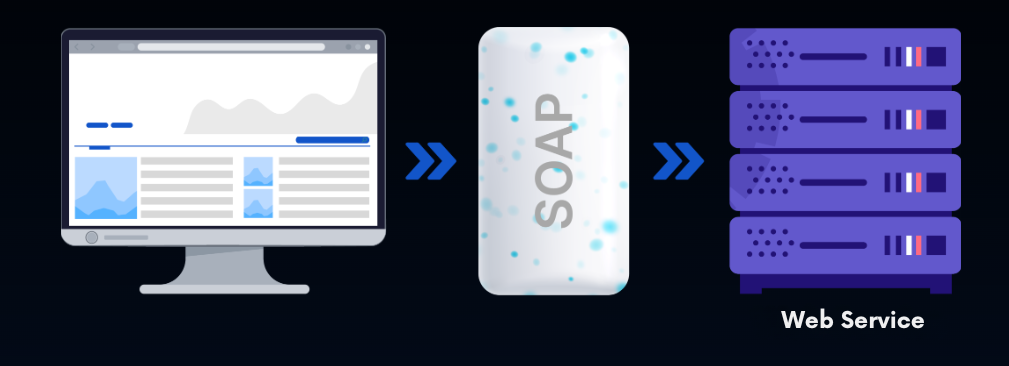
Key Features of SOAP Web Services:

  • Uses XML tags and structured data
  • Supports robust security and transactional integrity
  • Compatible with firewalls and proxies
  • Defined by a WSDL document

RESTful Web Services

Key Features of RESTful Web Services:

  • Lightweight and fast
  • Supports various markup languages
  • Better suited for web and mobile applications

Anchor Software's Web Service Offerings

Seamless Integration

Anchor Software offers a variety of web service API options designed to support real-time data exchange and batch processing. Whether your business operates in finance, healthcare, retail, or logistics, Anchor’s flexible web services can be tailored to meet your specific needs. Their solutions are built for enterprise integration, ensuring communication across different platforms and software systems.

Address Correction Web Service

Errors in address data can lead to costly shipment delays and returns. Anchor Software’s address correction web service provides real-time validation and formatting according to postal regulations. By integrating this service at the point of entry—whether on e-commerce sites, POS systems, or CRM platforms—businesses can ensure data accuracy and compliance.

Benefits:

  • Reduces human error
  • Ensures delivery accuracy
  • Supports large-scale data processing
  • Scalable across multiple user interfaces and entry points

How Web Services Work

Web services operate using SOAP messages or RESTful calls transmitted over the internet using HTTP. When a client makes a request, the server processes the data and returns an XML response (or other format). This exchange is defined by a WSDL document in the case of SOAP services.
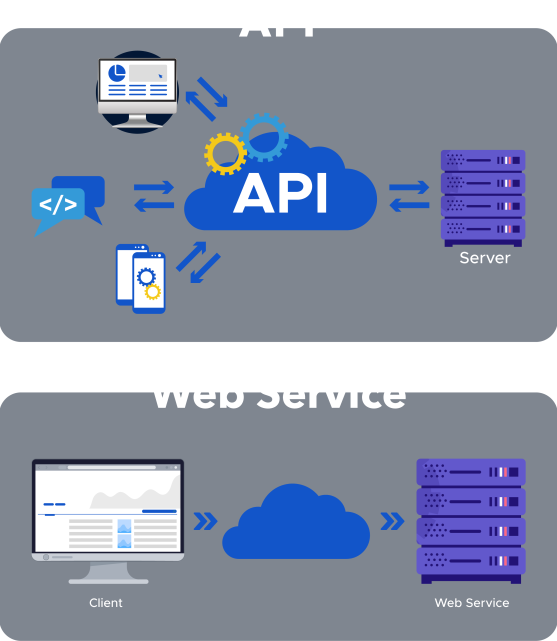
Basic Workflow:

  • The client sends a request (using SOAP or REST)
  • The server receives and processes the request
  • The data is retrieved and sent back as a structured response
  • The client displays or processes the data as needed

This interaction allows multiple systems to connect, exchange data, and function collaboratively, regardless of their programming language or platform.

Advantages of Web Services

Interoperability

Web services work across different platforms and programming languages, enhancing system compatibility and reducing the need for custom integrations.

Scalability

Designed to handle hundreds of thousands of requests, web services are ideal for businesses that need to scale operations without compromising performance.

Security

Protocols like SOAP offer built-in security features. Additionally, Anchor Software provides enhanced security options tailored for industry compliance.

Automation

By automating manual processes, web services reduce operational errors, improve data accuracy, and support faster decision-making.

Cost-Effectivness

Anchor’s solutions are low-cost, highly efficient, and built with scalability in mind, making them ideal for growing businesses.

Applications of Web Services

Web services are used in a wide range of applications:

  • Cloud computing environments (e.g., AWS offers a suite of web services)
  • Customer relationship management (CRM) systems
  • E-commerce platforms for order processing
  • Healthcare for sharing patient data securely
  • Finance for real-time transaction validation

Example: Address Validation

A retail business integrates an address correction web service to validate addresses during the checkout process. As customers input their shipping details, the service validates the data in real-time and offers corrections. This ensures accurate deliveries and improves customer satisfaction.

Web Services in Cloud Technology

In the context of cloud computing, web services are crucial for providing data services and APIs that enable access to cloud-based resources. Services like AWS and Azure offer cloud technology platforms that are built upon web service architectures. 
 
An AWS representative can guide businesses in choosing the right AWS offers, ensuring they leverage the full capabilities of cloud platforms for their unique requirements.

Discovering and Testing Web Services

Discovering Web Services

Discovery involves finding the appropriate web service for your business needs. Universal Description, Discovery, and Integration (UDDI) is a directory that allows businesses to list and find web services.

Web Service Testing

Testing ensures the service behaves as expected. Tools like SoapUI and Postman help developers send requests, inspect XML responses, and verify the service’s functionality.

Importance of Testing

  • Ensures functionality and performance
  • Validates security protocols
  • Confirms integration accuracy

Future of Web Services and Innovation

As organizations shift toward digital-first strategies, web services continue to be at the core of technological innovation. With the rise of generative AI, advanced data analytics, and API-first development, the future holds even more robust, cost-effective, and scalable service models.
 
Web developers are building smarter user interfaces that rely heavily on web service integration to deliver real-time features. From software development to enterprise solutions, web services provide the structure and functionality required for today’s fast-paced digital world.
web service
Web services

Conclusion

Web services are at the heart of modern software development, enabling businesses to connect systems, automate workflows, and deliver smarter digital experiences. Whether you’re implementing an address correction web service, exploring cloud computing, or integrating with SOAP vs REST APIs, solutions like those from Anchor Software offer the reliability, security, and functionality your organization needs to thrive.
 
As the World Wide Web continues to evolve, web services remain a cornerstone of digital innovation and communication, bridging gaps between technologies, platforms, and people.

Frequently Asked Questions

What are web services and why are they important?

Web services are software systems that enable communication and data exchange between different applications over the Internet or intranet networks. They are important because they allow integration of diverse systems, enhancing productivity and operational efficiency.

Anchor Software supports both SOAP web services and RESTful APIs, providing solutions for real-time processing, batch jobs, and scalable enterprise integration.

SOAP uses structured XML messages, requires a WSDL file, and supports enhanced security. REST is lightweight, uses standard HTTP methods, and often utilizes JSON or XML for responses.

Anchor’s services are language-agnostic, meaning they can interface with applications built in Java, Python, .NET, and other programming languages using open web protocols like HTTP.

Automation improves speed, reduces manual effort, enhances data accuracy, and supports faster and more reliable business decisions.

Simply contact Anchor Software for a consultation. Their team will guide you through setup, implementation, and ongoing support to ensure your web services meet your business needs.

Ready to Optimize Your Operations with Our Solutions?

Contact us today to schedule a free consultation or learn more about how our solutions can meet your needs.

Request a Demo

Privacy Overview

This website uses cookies so that we can provide you with the best user experience possible. Cookie information is stored in your browser and performs functions such as recognising you when you return to our website and helping our team to understand which sections of the website you find most interesting and useful.